
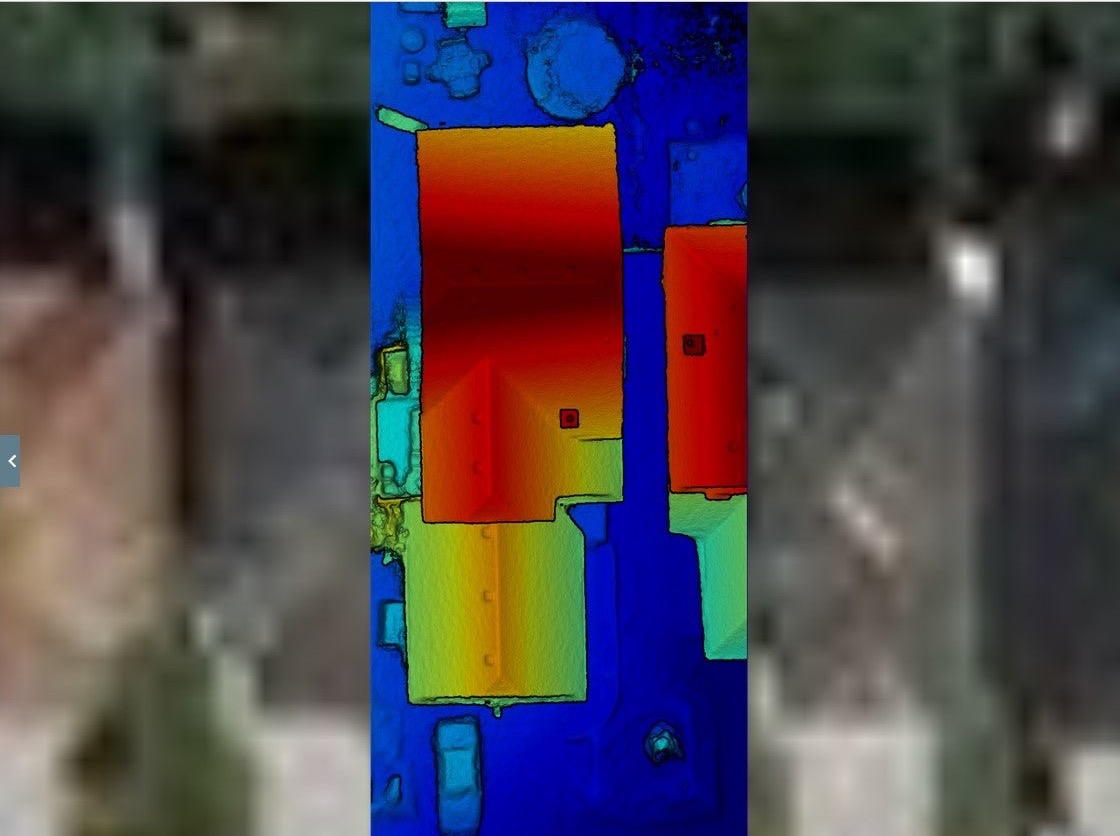
A thermal camera does not see moisture, damage, or defects. It sees surface temperature. Everything useful about a thermal roof survey follows from that one fact — including its limits.
Why temperature reveals anything at all
Wet insulation holds heat differently from dry insulation. After a day of sun, a roof cools unevenly: saturated areas release stored heat more slowly than the sound material around them. That difference is what a thermal survey is reading. The camera is not detecting water; it is detecting the thermal consequence of water being there.
The conditions matter more than the camera
Because the method depends on a temperature difference existing at all, timing is not a detail. A survey flown with no solar gain, after rain, in high wind, or on a roof that has not had time to cool will produce an image that looks like data and carries very little. Any operator who will fly a thermal survey at any hour on any day is selling you a picture, not an inspection.
What it will not tell you
Thermal imagery indicates where to look. It does not establish how much water is present, how long it has been there, whether the membrane has failed, or what the repair should be. Anomalies are candidates for investigation, and confirming them normally means physical verification on the roof.
Reading the deliverable honestly
A useful thermal report says what conditions the survey was flown in, marks the anomalies against a plan of the roof so they can be found again, and distinguishes clearly between what was observed and what is being inferred. If the report cannot tell you which is which, it is not yet evidence you can act on.
Start a conversation
Have a project in mind?
Tell us what you need to inspect, map, document or monitor.